

Thinset vs. Self-leveller when Installing Heated Floors
By Julia Billen
If new to installing radiant floor heating, one of the first decisions you’ll face is whether to use a latex-modified thinset or self-levelling compound. While both materials are commonly used in floor heating installations, the best choice depends largely on the type of flooring you’re installing over the heating system.
Latex-modified Thinset
Latex-modified thinset is a blend of cement, fine sand and additives that retain water to allow proper curing.
It offers several advantages for tile installations:
1. Durability and crack resistance. The inclusion of polymers enhances its strength and flexibility, reducing the likelihood of cracks due to substrate movement.
2. Cost-effectiveness. It’s generally more affordable than self-levelling compounds. This makes it a budget-friendly choice for many projects.
3. Wide availability. It’s easily found at most home improvement stores, ensuring convenience.
4. No primer needed. It can be applied directly without the need for a primer, simplifying the installation process.
5. Dual-purpose material. It serves both to cover heating wires and to set tiles, streamlining the materials required for installation.
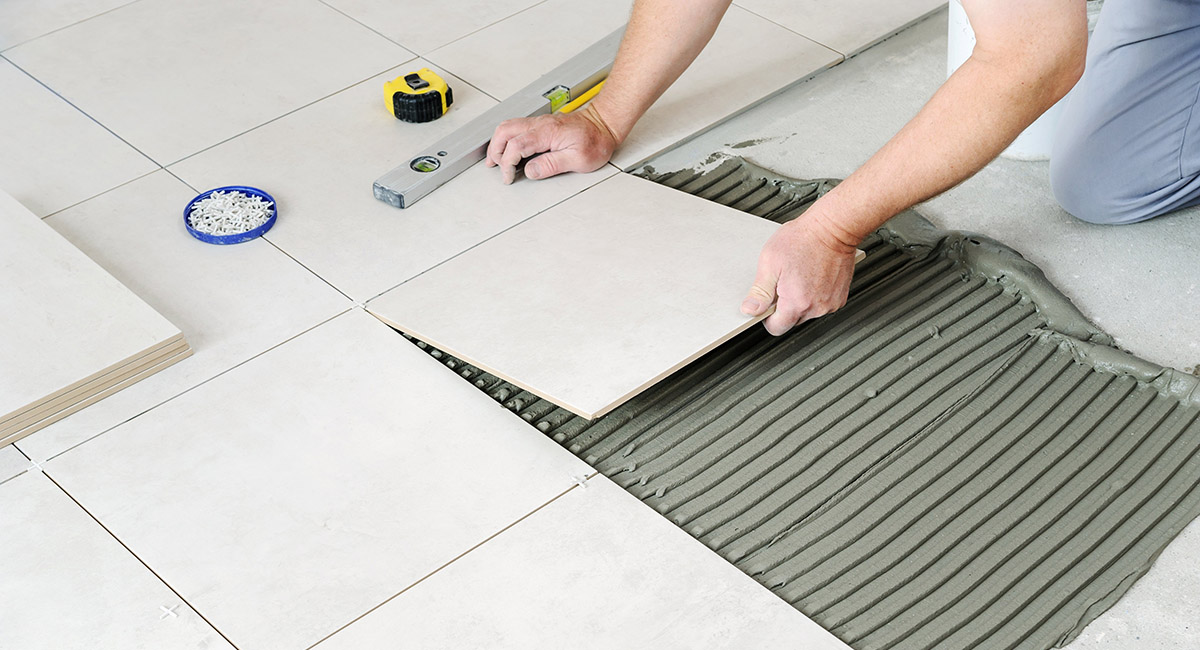
While latex-modified thinset is a popular choice for tile installations, it’s important to consider its potential drawbacks.
Achieving uniform consistency across multiple batches can be challenging, leading to variations that may affect adhesion and curing.
Properly levelling the surface with thinset requires skill and attention, as it doesn’t self-level, potentially resulting in uneven tile placement.
The application process is physically demanding and time-consuming, involving meticulous spreading and levelling.
When used with electric floor heating systems, there’s increased risk of damaging heating wires during application if not handled carefully.
Self-levelling Compound
Self-levelling compound is a mixture of cement, aggregates and other additives that automatically levels itself when poured.
It offers many notable advantages:
1. Creates a smooth, level surface. Self-levelling compound naturally flows to fill in low spots and imperfections, resulting in a flat and even surface ideal for various flooring types.
2. Faster installation process. This compound is designed for quick application and drying, allowing flooring projects to proceed more rapidly compared to traditional methods like latex-modified thinset.
3. Minimizes risk of wire damage. When installing over radiant heating systems, self-levelling compound encases heating elements smoothly, reducing the chance of damaging wires during the installation process.
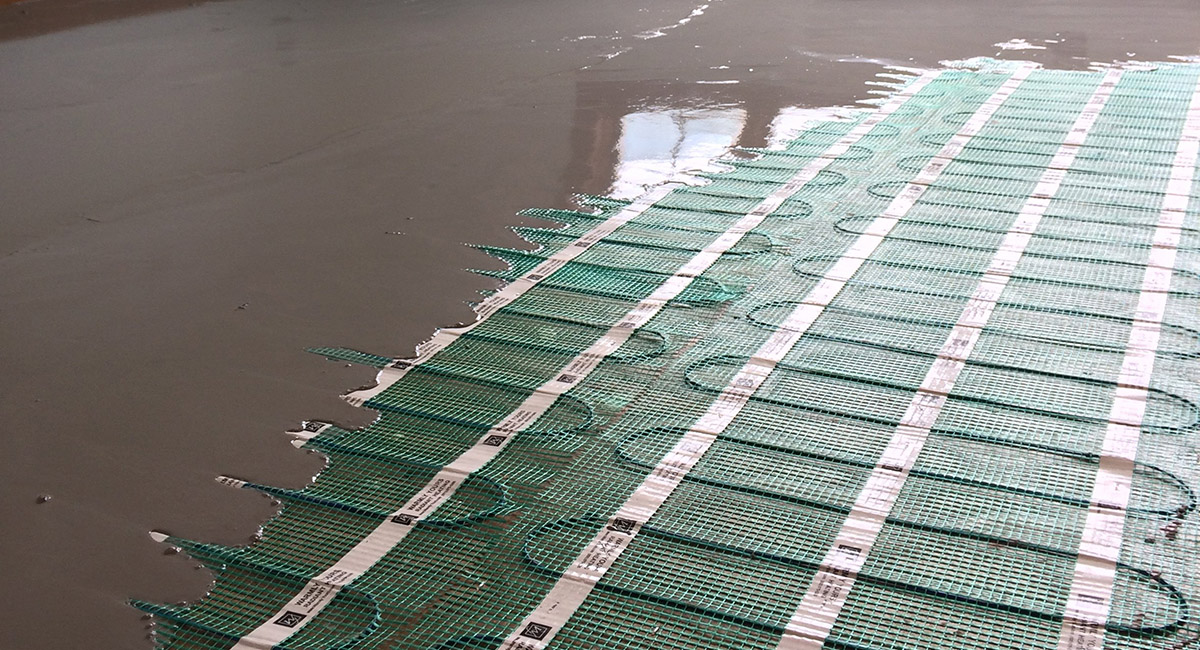
While self-levelling compound offers significant benefits in achieving smooth and level surfaces, it’s important to be aware of certain challenges associated with its use.
Self-levelling compound is generally more expensive than latex-modified thinset, which can impact overall project budgets.
To ensure proper adhesion and prevent issues like pinholing, applying a primer before the self-levelling compound is often necessary, adding time and cost to the preparation process.
The fluid nature of self-levelling compound can cause embedded radiant heating wires and mesh to become displaced or float if not securely fastened. To prevent movement during application, the heating mesh must be firmly attached or stapled down at frequent intervals, which can be labour-intensive.
Areas like vents and doorways need to be properly sealed or dammed to contain the self-levelling compound within the intended area, necessitating additional preparation.
Selecting the Right Adhesive
Choosing the right adhesive is crucial for a successful flooring installation. The suitability of latex-modified thinset versus self-levelling compound largely depends on the type of flooring material.
Latex-modified thinset is commonly used for attaching ceramic, glass, stone and cement tiles to various substrates, including concrete, plywood and vinyl flooring.
When installing vinyl or laminate flooring, achieving a smooth and level surface is crucial for stability and longevity. Self-levelling compound is typically recommended for these materials, as it creates a flat and smooth surface, reducing the risk of unevenness that can compromise the flooring’s integrity. Using latex-modified thinset under vinyl or laminate may result in slight irregularities, potentially leading to instability.
For hardwood floors, incorporating self-levelling underlayments between sleepers is generally advisable to ensure a consistent and level foundation.
Julia Billen is president, owner and co-founder of WarmlyYours. During her tenure, Julia has helped WarmlyYours grow into one of the foremost electric floor heating companies in North America. She is an active member of several governing committees and panels for the industry, including the UL standards committee and U.S. technical advisory group, Flooring Technical Standards and Issues panel, among many others. Julia can be reached at [email protected].