

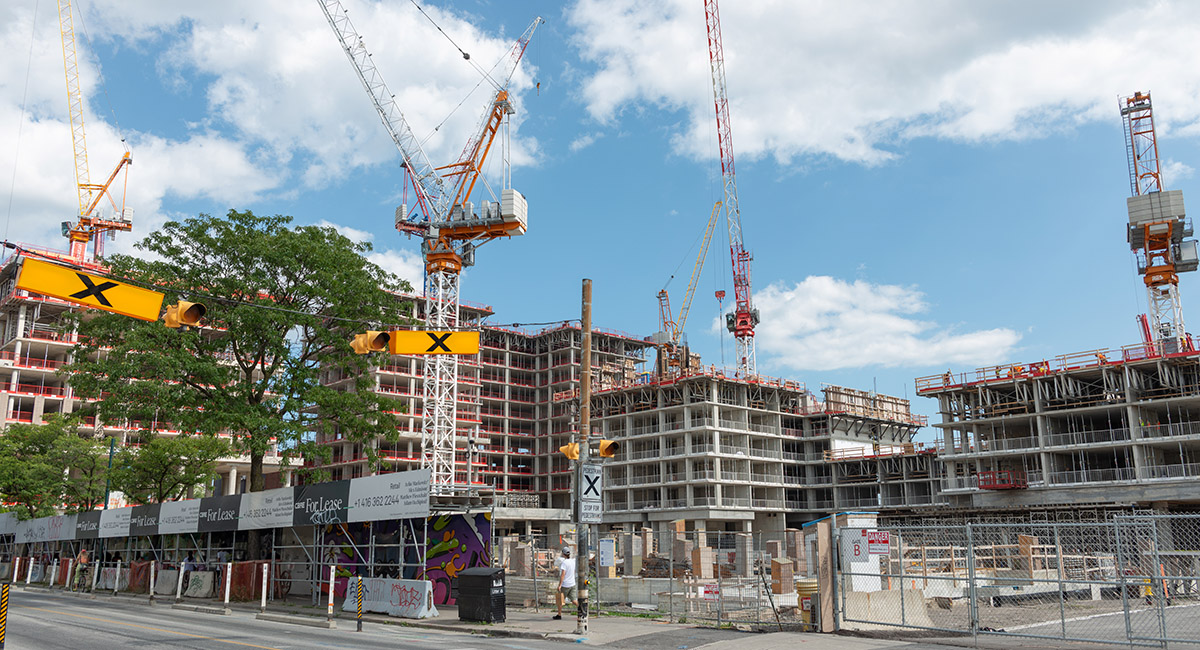
Rental Starts Lead Multi-Residential Construction
Record-high rental construction and more missing middle housing contributed to a notable increase in residential starts in 2025.
According to the latest Housing Supply Report, released by Canada Mortgage and Housing Corporation (CMHC), housing construction increased six per cent year-over-year in 2025 to 259,000 units; however, the ownership market weakened overall. In Toronto, for example, starts fell well below the historical average and reached the lowest per-capita level among the seven large census metropolitan areas (CMAs) covered in the report.
Condominium starts slid sharply across the country as pre-sales collapsed. Rising unsold inventories suggest that supply might not align with the needs of prospective buyers. Homebuilders are also seeing softer buyer demand and tighter financial conditions, leading to project delays, cancellations or conversion to rentals.
The slowdown coincides with double-digit increases of completed and unabsorbed inventory across the metro areas, except Montreal. Vancouver recorded the highest unsold condo inventory at completion, while Edmonton had the highest ground-oriented inventory. Toronto saw strong rises in unsold condos and row homes.
Overall, resiliency in the homebuilding market in 2025 was primarily driven by an abundance of rental construction in Calgary, Edmonton, Ottawa, Halifax and Montreal, and the second highest ever level in Toronto. As well, total missing middle starts rose by about 10 per cent across all CMAs.
CMHC reports that for the first time this century, rental starts exceeded condo starts in Toronto. As homebuilders shifted away from riskier ownership-based projects, the construction of buildings with three to five units was more prevalent than projects with more than 100 units. Overall, 2025 housing starts fell significantly compared to recent years, but completions remained elevated. This has relaxed market conditions in the near term but could lead to a sharper supply gap and a tighter market in the long term.
The housing market eased in Vancouver, as weakened demand from slower population growth coincided with record completions after years of strong housing starts. However, the viability of new projects was increasingly under strain, with land scarcity and high costs slowing rental construction and weak pre-construction sales weighing on the condo market. Densification policies are strengthening missing middle housing, which includes lowrise apartments, multiplexes, row homes, stacked townhouses and accessory suites.
Rental construction reached record levels in Montreal, and accounted for more than 80 per cent of 2025 starts, while condo starts have fallen to a record low. There is an abundance of supply amid weaker demand but with housing starts expected to decline, lower completions will put further pressures on affordability.
New home construction in Calgary reached another record high, with the city surpassing both Toronto and Vancouver in actual housing starts. Rental and missing middle construction led growth, supported by favourable financing and zoning reforms, but labour and building capacity pressures are becoming more persistent. These constraints are lengthening construction timelines and creating risk for future supply.
Housing starts in Edmonton also hit another record high through government incentives, rezoning and relative affordability. As a result, Edmonton saw strong growth in both rental and ownership starts, including condos. Missing middle housing expanded with a shift toward more housing density, while historically high completions and an increase in resale listings increased overall inventory.
Rental units raised total housing starts in Ottawa to near-record levels, supported by incentives for transit oriented development. Medium-density and missing middle housing, including conversions, also supported stronger starts. However, these results reflect investment decisions made several years ago under more favourable financing conditions, with recent starts trending lower. As a result, CMHC expects supply to tighten as demand recovers.
In Halifax, strong completions and higher resale listings combined with softer demand and made housing market conditions more balanced. Construction is focused on rentals, with missing middle and developments around urban transit hubs remaining high. However, with many builders operating near full capacity, market intelligence points to more project delays and postponements due to shortages of skilled labour, threatening the momentum for future supply.