

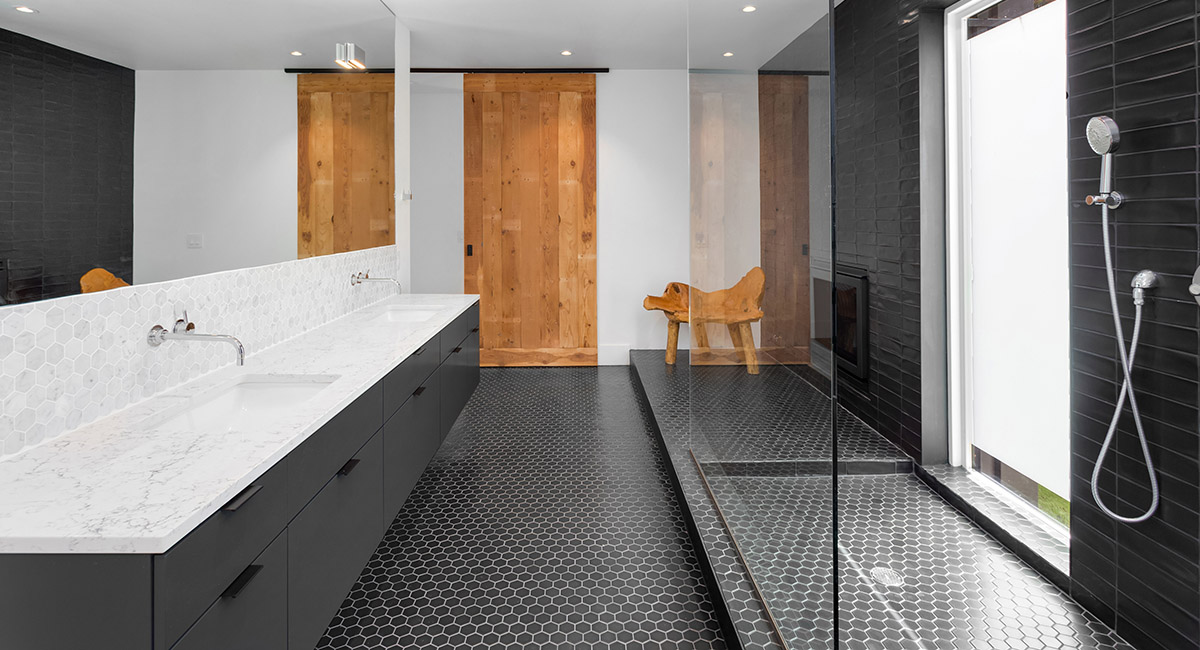
Grout Colour Considerations for Tile Installations
By Mark Tupek
Grout does much more than fill the gaps between tiles. A myriad of grout colours, application styles and advanced technologies have the power to transform the look and durability of a tile installation.
When choosing grout, it’s crucial to understand the project’s intended aesthetic, colour scheme, tile type, shape, size and pattern, and lighting in the space, along with the technical needs for grout installation and long-term performance.
Thoughtful Design
One of the first considerations in choosing a grout is the mood desired for the tile installation. While the tile choice usually establishes a certain appearance, the grout colour can enhance or even dramatically change the intended feeling.
Traditionally, the most commonly used grout colours are neutral whites, beiges and greys offered in countless variations. But today, grout can be just about any colour imaginable. Designers should consider the look of the entire room when recommending grout colours. Colour science drives grout choice through monochromatic, analogous or complementary colour pairing options for tile and grout.
Monochromatic Schemes
When the grout and tile colours are monochromatic, a minimalist look is achieved by creating a focus on the entire tile installation. Light-coloured tiles, ever-popular in paler earth tones and, more recently, pastels, paired with matching grout make a room appear larger, more welcoming and softer. Classic white tile with white grout is timeless, clean and opens up a space. Deeper-hued tiles in today’s nature tones of cool blues, greens or deep purples paired with the same colour grout add depth and seamless tranquility to a room. Warm-toned tiles like red-brown emphasize energy and vibrancy when matched to the grout. Generally, dark grouts make a space look smaller, creating a cozier atmosphere in larger areas.
Analogous Pairings
Choosing a grout colour that is analogous or close to the colour of the tile on the colour wheel creates a harmonious look. The small distinction between the tile and grout colour allows the two to be separate yet balanced. Neutral grouts that are slightly lighter or darker than the tile have the same harmonizing impact. Analogous grout pairings add depth and definition to the tile shapes, colours and patterns.
Complementary Combinations
A complementary grout colour has the most dramatic impact on the aesthetic, as it’s opposite the tile colour on the colour wheel. Contrast delivers a bold, stark definition of each tile shape and calls attention to the grout lines. A dark neutral grout with a light tile or vice versa provides differentiation that either makes the grout lines or tile stand out; however, it also makes the installation look busier. Stylish black and white tile-grout pairings leverage contrast to add bold energy and definition to a space.
Tile Varieties
Currently, designers are mixing tile types, sizes, shapes and patterns within a single room to add drama and interest. From penny to vertical subway to large planks or gauged porcelain panels, tiles can coexist in one space. Choosing a grout colour that works for all the tiles helps bring the various patterns together for a cohesive design. Varying the grout width to optimize the look for each of the tile types, sizes, shapes and patterns is essential to achieve the desired outcome.
Popular porcelain tiles made to look like natural wood, stone, marble or cement are enhanced by neutral grout colours that blend in, not drawing attention away from the tile’s beauty. Neutral-coloured grouts are also well-suited to finishing large heavy tiles, natural stone and the thin grout lines between gauged porcelain panels.
Lighting’s Impact
The finished aesthetic of the tile installation is greatly impacted by lighting, whether natural (indirect or direct) or artificial. Natural indirect light enhances the colour and beauty of the tile-grout pairing, while direct sunlight can make the installation appear washed out and fade grout over time unless carefully sealed. Both natural and artificial direct lighting reflects off the surface, especially glossy tile, lightening up the tile’s appearance.
Dark or matte colours and greater contrast between grout and tile help maintain the intended look, if the direct light cannot be softened. In darker spaces, lighter colour grout highlights the tile. Designers must also consider the type of artificial lights used. LED lights can cast yellow or blue hues, which impacts the perception of the grout colour. Testing grout choice on-site minimizes unplanned effects of the ambient lighting.
Technical Considerations
Grout not only fills the gaps between tiles but also provides important protection for the tile installation. Properly applied grout supports and stabilizes the tile expanse, reducing chips and cracks. It keeps moisture and dirt from getting between the tiles and gathering under or behind them, which contributes to installation failures. Mixing and applying grout according to manufacturer instructions is critical for the grout to set properly and perform as designed. Too much or too little water can change grout colour and jeopardize its performance. Sealing grout when recommended protects its look and longevity.
Job Site Conditions
Job site conditions impact the choice of grout technology and its application. Considerations include water access, sun exposure, air temperature and humidity, proper mortar application and substrate/tile moisture level. Limited water access elevates ready-to-use grout as a solution, with newer technologies delivering improved performance and cleanup. For grout installation, sun exposure must be managed, as direct sunlight dries grout quickly, making it darker, while shade dries grout slowly, potentially lightening its finished colour. Air temperature and humidity must also be managed to ensure proper grout drying and curing. High-performance grout technology, such as non-epoxy stain-resistant grout, is less sensitive to temperature and humidity variations.
Mortar applied too high in the grout joints impacts grout colour. If the joint depth is not at least two-thirds tile depth, the grout appears darker and may not set properly.
For most grouts, the right moisture level is required for proper curing. A very dry substrate or absorptive tile that removes water from grout can cause too-fast drying, a lighter colour or improper curing. Moisture testing the substrate and absorptive tile per industry practices is essential, as is remediating moisture issues.
Mark Tupek is a marketing manager at H.B. Fuller. Mark joined the organization in 2021. Before then, he held inside sales and sales analyst positions with two large corporations while earning a master in business administration. In his current role, Mark manages marketing projects for H.B. Fuller within the construction adhesives business, focused on flooring installation trends.