

Transforming a Travertine Floor from Gluey to Glossy
By Gen Schiavone
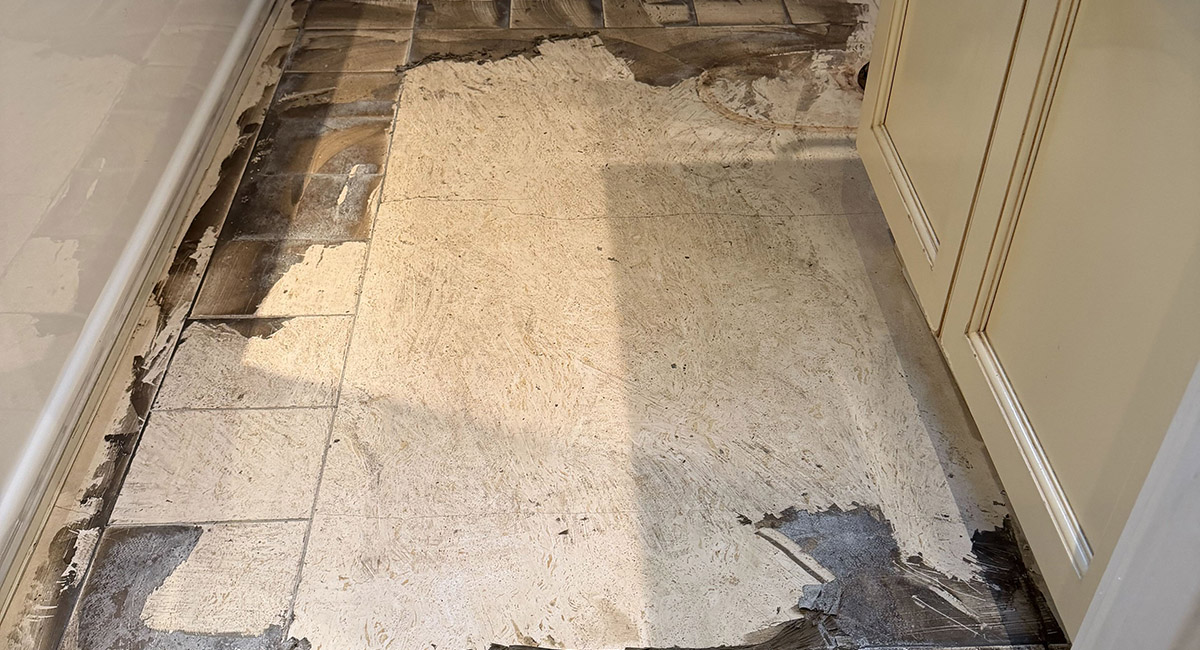
Adhesive residue on a natural stone floor can make it look beyond repair. The surface is dull, patchy and tacky, holds dirt and resists routine cleaning. But when the stone is travertine and the tiles themselves are in good condition, the problem may be limited to the surface. In many cases, the residue can be removed and the stone restored, avoiding the need for replacement.
Don’t Just Judge the Residue
The first step is to determine what the adhesive is hiding and whether the stone itself has any underlying issues. Residue sits on the surface of the travertine, while cracked or loose tiles, hollow-sounding areas and movement underfoot point to separate problems that surface restoration cannot resolve. Whether a floor is suitable for restoration depends on a professional assessment of the adhesive, any staining, the condition of the stone and the substrate beneath it, rather than the appearance of the tiles alone.
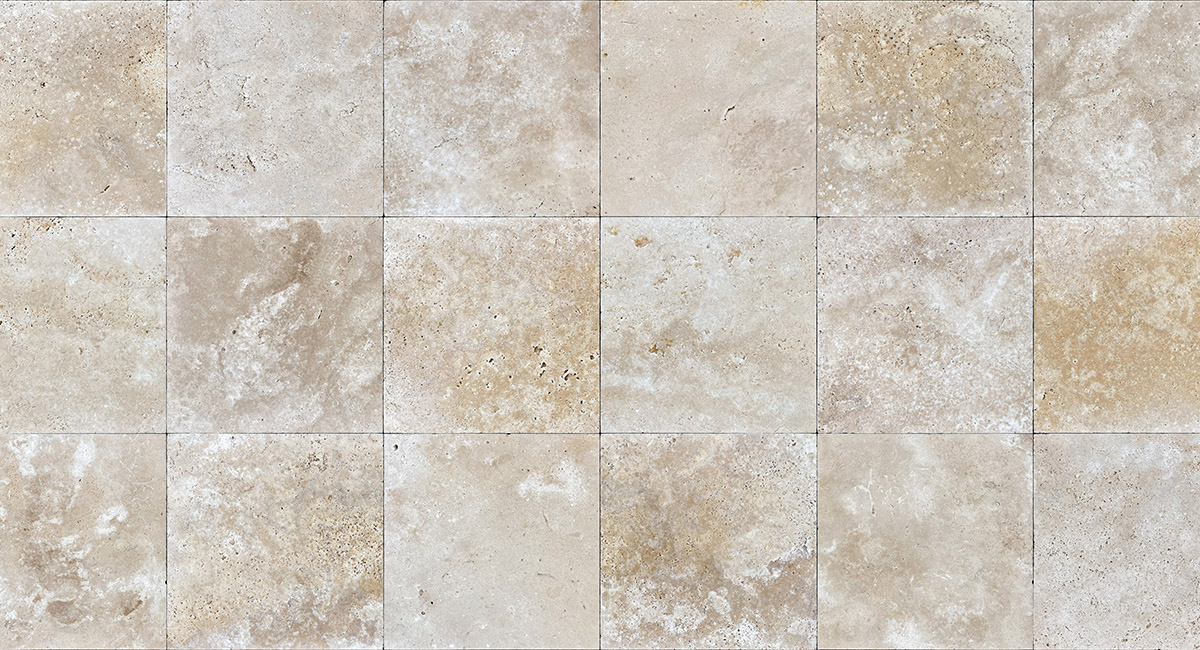
Travertine is a calcium-based natural stone. It is softer than granite and sensitive to acids, which can etch the surface and leave dull marks. Acidic cleaners and some general-purpose adhesive removers can cause further damage. This means any product used to remove residue should be confirmed as compatible with natural stone before application.
Bathroom Floor Restored
In a recent residential project, a heavy layer of adhesive residue was mechanically scraped from a 30-square-foot travertine floor before any abrasive work began. Removing most of the residue first allowed the diamond sanding process to focus on the stone itself. The appropriate sequence for another floor would depend on the type of adhesive and condition of the stone.
Once the excess adhesive was removed, the floor was sanded with diamond abrasives, progressing through increasingly finer grits. The coarser grits removed residual adhesive, scratches and surface wear, while the finer grits gradually refined the stone to create an even finish ready for polishing.
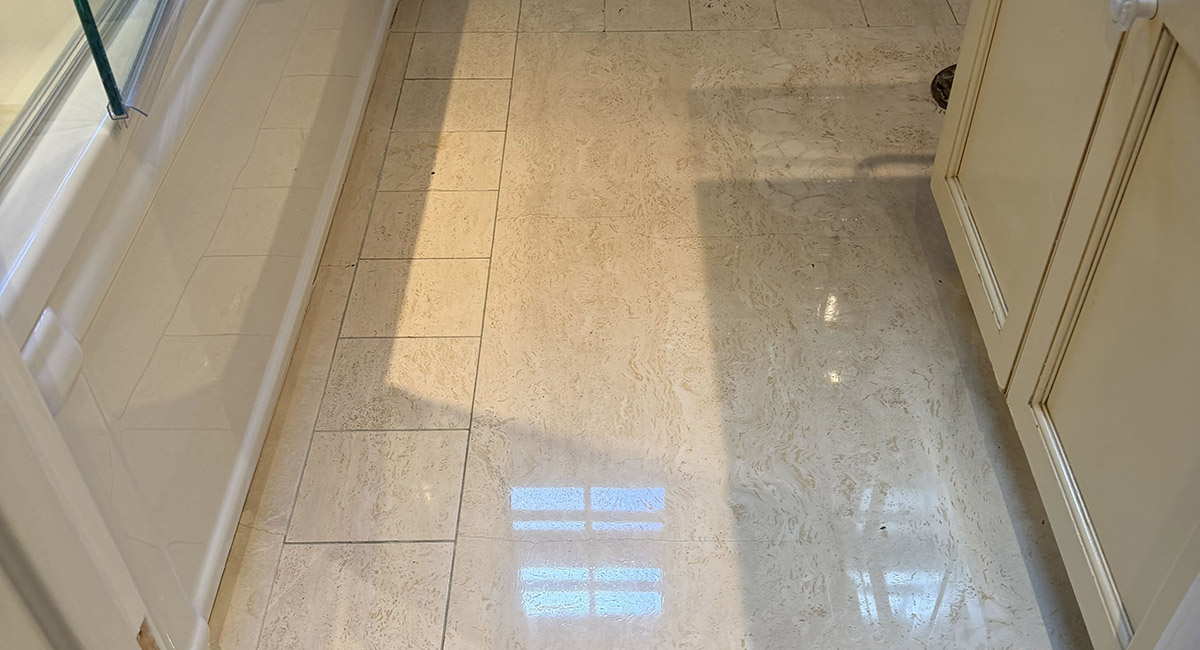
Travertine can be left honed for a soft, matte look or polished to a gloss. The choice is influenced by the room, expected traffic and owner’s taste. A penetrating sealer may be applied after polishing, based on the stone’s characteristics and the product used. Unlike a topical coating, a penetrating sealer soaks into the stone, helping improve its resistance to staining. It does not make the stone acid-proof, so proper daily care remains important.
For this project, the floor was polished to a high-gloss finish and sealed. From start to completion, the job took about six hours.
Gen Schiavone is the owner of Techni-Marbre, a natural stone restoration company serving Greater Montreal for more than 25 years. Techni-Marbre restores, repairs, polishes and seals marble, travertine, terrazzo and other natural stone floors, stairs and countertops.