


Customer service: More challenging, important than ever
“The customer’s perception is your reality,” writes author Kate Zabriskie in her book, Customer Service Excellence: How to Deliver Value to Today’s Busy Customer. There is meaning and power in that one short sentence. Customer service has changed. Society moves at a more rapid pace than it did a generation ago. Customers are more savvy, and have higher expectations than they did 20 years ago. International free-trade agreements and burgeoning global trade mean more products from vastly more places.
Grant Heggie, president and c.e.o of Toronto, Ont.-based Melmart, believes the combination of all of these things has created one of the flooring industry’s biggest challenges. “I think the biggest thing that impacts us from a customer-service standpoint is the simplicity of our business 20 years ago versus the complexities today,” he says.
“For a customer service person,” says Heggie, “there wasn’t much information to know. They had to know something about carpet and vinyl, and that was about it. Now we sell 10 or 12 different categories. Our people have to know about ceramic, porcelain, wood, solid wood, engineered wood, laminate flooring, carpet and sheet vinyl. And that’s before you get into understanding pads and glues and the complexity of all the different glues that go with all those different products and all the trims and mouldings.”
“When our customers call here,” he adds, “they would love to get somebody who is an absolute expert in absolutely everything.”
That is clearly an unreal, impossible customer- service expectation to meet. Melmart, for example, stocks 10,000 SKUs in its 90,000-square-foot warehouse. Heggie says it takes a customer-service person at least one to two years just to start getting familiar with all those products.
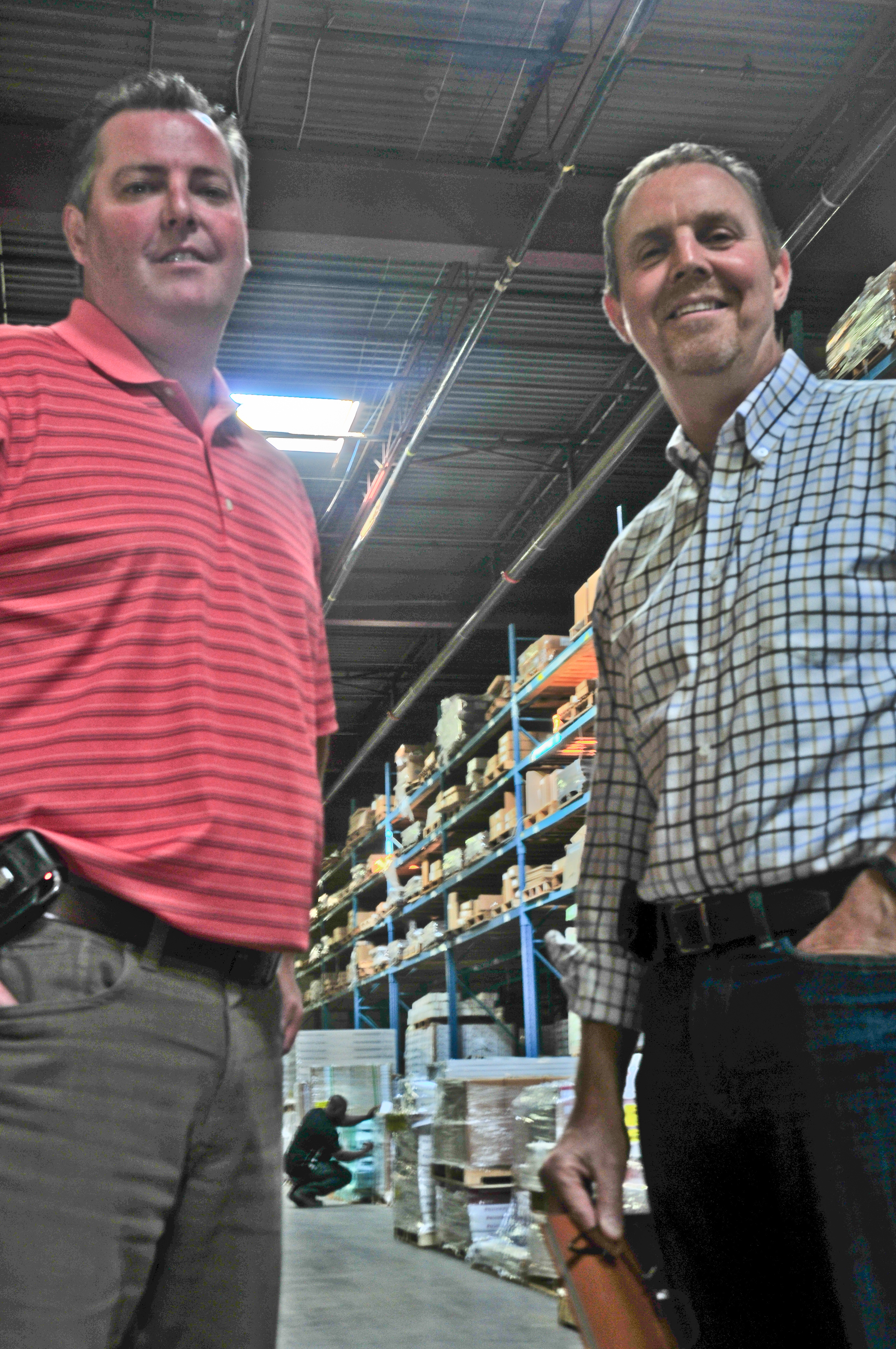
When it comes to customer service today, distributors and dealers, alike, find themselves having to pretty much operate by the motto of the U.S. Navy World War II construction battalions, known as the Seabees: “The difficult we do right away. The impossible takes a little longer.”
“Customer service is the opportunity to make yourself stand out from the competition,” affirms George Leahy, who co-owns Fabulous Flooring in Moncton, N.B. He and his partner, Gary Williams, opened their own store in 2003 after being connected by an installer who did work for both of them. Williams and Leahy had been competitors for 20 years. Their tight focus on customer service has been an essential part of the store’s success. That’s why, for example, the staff is not paid on commission.
“I spent 20 or 25 years on commission,” Leahy says. “If you don’t sell, you don’t eat. And that makes you make bad customer service decisions.
“You can’t just tell people what you think they want to hear,” he explains. “Because you know what? People really do want to hear advice. They do want to hear you suggesting something that may do a better job for them, rather than taking the easy road and selling something that’s a better price and fits their budget.
“We ask all kinds of questions, and the answers guide us to where we should go,” Leahy adds. “Some people you listen to; some people need to be steered; and there are some people who have it all figured out and you just have to go to the cash register.”
Leahy’s and Williams’s retail customer-service philosophy has seen Fabulous Flooring build a stable of repeat customers over the years. “A lot of times we’ll end up giving away cleaners to cement the deal and the relationship,” Leahy says, “because that person is going to have a son or daughter, or know somebody who will want to come in. In the long run, that eight-dollar cleaner is going to bring me more in the long run than the three dollars profit I would have made on it.”
As a local flooring dealer, Leahy has carved out a niche for himself and worked hard to build a solid reputation with his customers. In the flooring industry, independent retailers are very much up against the big-box stores. Leahy believes there is a big difference in customer expectations between the two channels.
“I don’t think people expect a lot of customer service out of the big-box stores. That’s a price-driven outlet,” he explains.
An independent store, however, is driven by service first, then product knowledge and finally price, Leahy believes. Customers who come into an independent store such as Fabulous Flooring aren’t putting price first. They’re coming in to make a flooring investment in their homes. The bar is raised much higher. “They want to come in and talk to the people who know what they’re talking about,” he says.

There are different nuances in customer service at the dealer and distributor levels. At the store level, for example, Leahy believes listening to customers about their design styles is the most important aspect of client service.
“When most women come in — and it’s women who make the majority of design decisions — it’s style and colour first, and then whether this product is going to stand up. That’s where the product knowledge comes in. It might be the toughest product in the world, but if the lady doesn’t like the colour you’ve just wasted a lot of her time and yours by giving her useless information because it’s blue and she wants green.”
On the distributor side, customer service is more complex — and more demanding. Distributors have both dealers, and their consumers, as their customers. For distributors like Melmart, their primary clients’ expectations are more practical.
“Customers call for something, and they want you to have it. They understand that we have 10,000 SKUs and we can’t possibly inventory all of them. When we don’t have something, they want to know when we can get it, and they want that information to be accurate. On an ongoing basis, that is probably one of our biggest challenges,” says Heggie.
“Big-box stores often have a small colour selection and deep inventory. But for a specialty retailer, that doesn’t work. He’s going to have a consumer walk in and see hundreds of colours. That’s just the way they operate. We can have a small inventory in a narrow collection, but we have to have a lot of inventory for other products.”
The quick local availability of product from a distributor is becoming more important with dealers, Heggie says. “Most of them don’t want to stock big inventories. They are tying up their precious capital when they do that.”
Marcus Stone, Melmart’s vice-president of marketing, agrees that ease of doing business is the number-one priority in the customer-service relationship between flooring dealers and distributors.
“Years ago when the market was more vibrant, dealers could book [installation projects] six to eight weeks in advance and it would give us a lot more breathing room to satisfy their needs with materials,” he says. “Today independent retailers are really relying on the distributor to have the answers and the stock right away because they’re probably booking two to four weeks out.”
Distributors have it tougher when it comes to customer service. When they have a supply issue, for example, there’s a domino effect. When product isn’t in the warehouse when it was supposed to be, it means dealers are not happy. That’s because they can’t start an installation on schedule. In turn, their customers aren’t happy, because there is a room with a floor that has been ripped out.
With more and more woods coming from Russia and China, for example, distributors often get caught in the middle of international trade and security, as well as logistics issues. A shipment may not be able to leave Shanghai on time, for instance. For U.S.-bound cargo, manifests must be electronically transmitted to U.S. Customs and Border Protection (CBP) 24 hours prior to scheduled departure. The cargo cannot be loaded until CBP receives the manifest. Marine carriers must also electronically transmit cargo information in advance to the Canada Border Services Agency for shipments arriving in Halifax, Montreal and Vancouver. Even if a shipment does leave a foreign port on time, it could be held up at Customs in the U.S or Canada upon arrival if containers get inspected. Bad weather on the high seas can affect transit time. Or containers may end up sitting in a Canadian National or Canadian Pacific Railway intermodal yard until the next eastbound train is scheduled to leave.
There can also be issues even when a dealer’s flooring order is manufactured in North America. “A shipment coming from North Carolina isn’t going to get here in a day,” notes Heggie.
“We’ve often said that in our business, our customer service can only be as good as our suppliers,” says Heggie. “We end up not looking good because we get a date, but then a supplier calls and says ‘now it’s going to be this date.’ That makes us look bad.”
In the past, Heggie says, a common complaint from dealers was that they didn’t learn about delays until they arrived at the warehouse to pick up orders. That has changed, Heggie notes.
When their customer service goes awry for whatever reason, Leahy, Heggie and Stone have one thing in common: all three take it personally.
“When we have provided service that is unacceptable, you take it very personally,” says Heggie. “I think it’s very hard not to if you have been in the business for any length of time and you care about it.”
“There’ve been times when things haven’t gone perfectly,” admits Leahy. “Sometimes it has been my fault, sometimes it has been the fault of someone else on the team. You want to make it good in the long run because you’re a small, local business.”
Leahy is very conscious of the fact that other people — his employees and their families — are relying on him for their financial well being. That’s a big part of the reason why he is so focused on providing the best customer service that he and his team can, he says.
Finding the right people for customer service today is getting more challenging, says Heggie.
“When I started in the industry 30 years ago, everybody was young. There were a lot of 20-somethings. Today that’s not so common.”
Younger workers today don’t hesitate to change jobs if they don’t feel there’s any gratification. A couple of generations ago, people started a job and held it for 30 or 40 years. Today, people change jobs an average of seven times in their careers.
One of the top customer-service tips from the Canadian Professional Sales Association (CPSA) is letting final job candidates spend some time on the floor with other team members. The CPSA says this is a good way to let the person get a taste of the team and the environment, and for staff to provide their first impressions of the candidate.
“Most things are about attitude,” says Heggie. “To us, customer service is being very, very helpful.”
Leahy believes this is where having staff who aren’t paid on commission is really important for customer service.
He tells customers whom he has been dealing with himself, not to worry if they return to the store when he isn’t there, because they’ll be looked after by another team member. “That’s a big part of customer service, too — taking care of a customer who isn’t yours,” he says.
Some businesses have better customer service than others. That’s simply the reality of it. Leahy and Heggie have similar philosophies — they treat their customers as they themselves want to be treated as consumers. Leahy has this piece of advice for anyone who doesn’t have a strong focus on customer service: “I’d say you better find another line of work, because retail and customer service go hand in hand.”